MCP
Best Telegram MCP in 2026: 9 Servers Honestly Compared

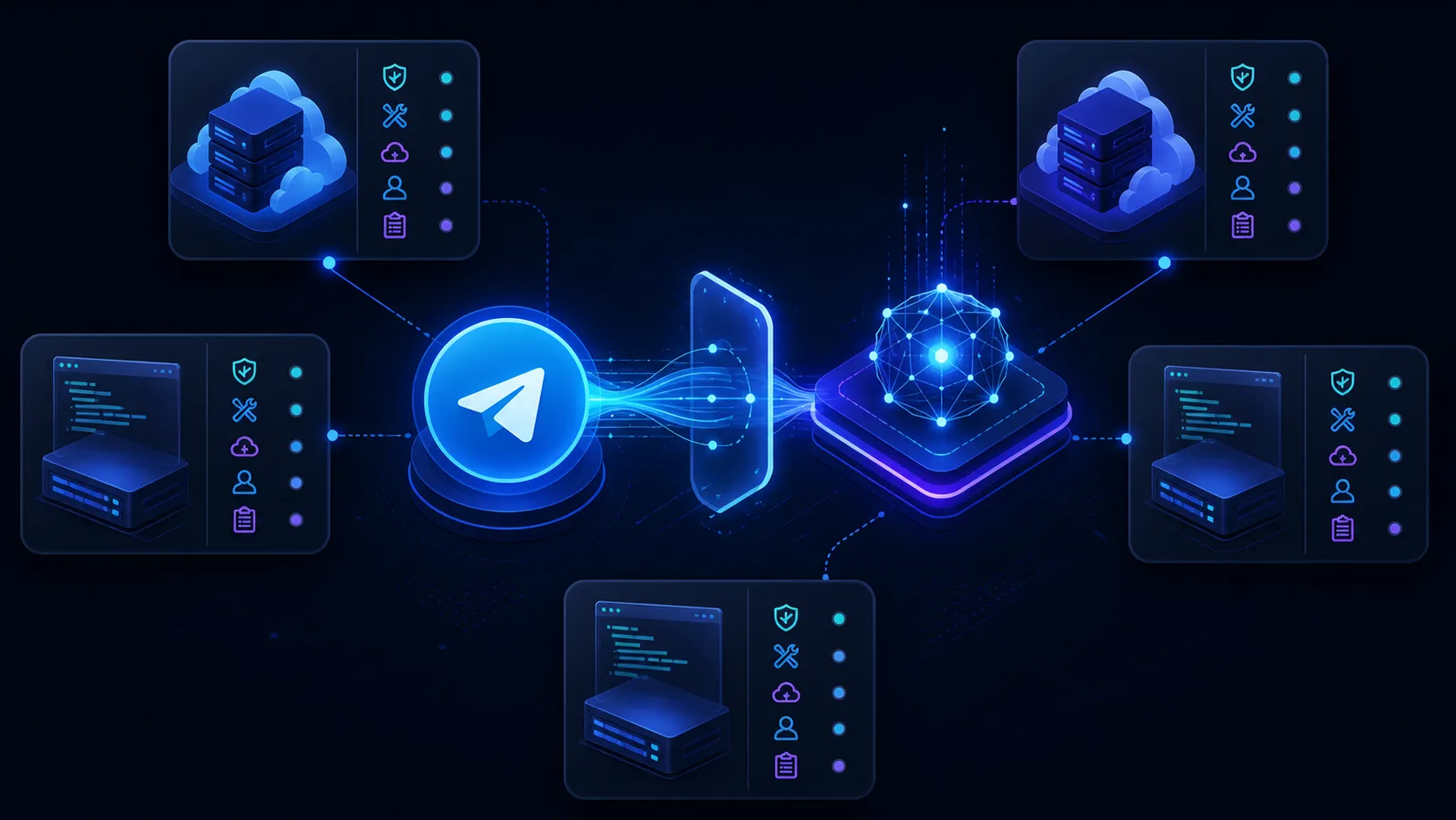
There is no universal “best Telegram MCP.” There are now two genuinely different categories: hosted Telegram workspaces that expose several accounts, CRM data and permissioned actions through one remote endpoint, and self-hosted Telegram clients that give one technical user direct access to a Telegram session.
We tested the buying decision, not just the tool counts. Our overall pick for a business operating Telegram across several accounts is Entergram. TeleBoost is the strongest hosted alternative for outreach-heavy teams. chigwell/telegram-mcp is the broadest open-source power option. tolboy/telegram-mcp-tdlib has the strongest production-oriented self-hosted account isolation. Prgebish/mcp-telegram has the clearest per-chat default-deny policy, and dataz.md is the cleanest hosted read-only option.
Entergram publishes this comparison, so assume we have a point of view. To make it useful, we link to every product or repository, use only publicly verifiable features and prices, and spell out where another option is a better fit.
Quick answer: Choose Entergram for hosted business workflows across real accounts. Choose TeleBoost for hosted outreach. Choose chigwell for maximum open-source breadth. Choose tolboy for isolated multi-account self-hosting. Choose Prgebish for per-chat ACLs. Choose dataz.md for hosted read-only analysis. Choose mcp-telegram/mcp-telegram for a quick local
npxsetup, DmitryKhali for confirmation-gated personal sends, and chaindead for a lightweight local bridge.
The best Telegram MCP servers at a glance
| Telegram MCP | Best for | Real user account | Hosted | Multiple accounts | Starting MCP cost | Main trade-off |
|---|---|---|---|---|---|---|
| Entergram | Business teams and multi-account operations | Yes | Yes | Yes, one endpoint | €39/month | Paid CRM platform, not a tiny standalone script |
| TeleBoost | Outreach, campaigns and developer workflows | Yes | Yes | Yes | $39/month | MCP begins on Pro; product is outreach-led |
| chigwell/telegram-mcp | Technical users wanting maximum local control | Yes | Self-hosted | Yes, native labels | Free, infrastructure excluded | Broad session authority and ongoing maintenance are yours |
| tolboy/telegram-mcp-tdlib | Production-oriented self-hosting and strict account isolation | Yes | Self-hosted | Yes, isolated sessions | Free, infrastructure excluded | Larger JVM/TDLib stack to operate |
| Prgebish/mcp-telegram | Per-chat default-deny access control | Yes | Self-hosted | Not its central workflow | Free, infrastructure excluded | Intentionally smaller eight-tool surface |
| dataz.md | Hosted read-only Telegram analysis | Yes | Yes | One provider account per profile/VM | $19.50 per hosted VM/month | Public gateway cannot send or mutate Telegram data |
| mcp-telegram/mcp-telegram | Fast local setup and separate named account instances | Yes | Local or hosted option | Separate sessions/server entries | Free locally, infrastructure excluded | Account unification and governance remain client-side |
| DmitryKhali/telegram-mcp | Safer personal use with explicit send confirmation | Yes | Self-hosted | Side-by-side instances | Free, infrastructure excluded | Narrower toolset; multi-account is not one unified workspace |
| chaindead/telegram-mcp | Simple local Telegram access | Yes | Self-hosted | Not a core documented workflow | Free, infrastructure excluded | Fewer business controls and no shared CRM layer |
Pricing and capabilities were checked on August 30, 2026. Open-source projects can change quickly; inspect the current repository and release history before giving one access to a live account.
How we compared them
A Telegram session can read private conversations and act as you. That makes “number of tools” a poor first filter. We scored the nine options against seven questions:
- Account model: Does it access a real Telegram account or only a BotFather bot?
- Deployment: Is it a maintained remote MCP or software you run locally?
- Permission boundary: Can you start read-only, gate sending and revoke access cleanly?
- Multi-account design: Does it preserve which account owns every chat and action?
- Operational safety: How are sessions, proxies, confirmations and audit history handled?
- Business context: Can the AI see CRM fields, tickets, comments and assignments as well as raw messages?
- Total effort: What do setup, updates, incident response and infrastructure add to the sticker price?
We excluded bot-only bridges from the main ranking because a bot cannot see the private DMs and history already attached to your personal account. If you are choosing between those architectures, read Telegram MCP vs the Bot API.
1. Entergram - best overall Telegram MCP for business teams
Entergram's Telegram MCP sits on top of the real Telegram accounts connected to an Entergram workspace. One remote endpoint can list accounts, read chats and messages, work with CRM fields and tickets, create private comments and perform permitted message actions. The key advantage is not a giant tool count. It is that the MCP inherits a maintained business layer rather than exposing an unstructured session directly.
The Pro plan is €39 per seat per month, including MCP/API access and five Telegram accounts; extra accounts in the same seat are €5 per month each. Each connected account uses a dedicated proxy/IP, and multi-account tool calls retain an account_id so an agent can distinguish, for example, @sales_eu from @support_us.
Where Entergram is strongest
- One hosted endpoint across multiple real Telegram accounts
- CRM fields, tickets, internal comments, analytics and account identity in the tool context
- Scoped authorization and an audit trail for team workflows
- No Telegram API ID, API hash, session-string file or local Python service to maintain
- Best fit for Claude, ChatGPT, n8n, Make or custom agents operating business processes
Where it is weaker
- It is paid software and overkill for a developer who only wants to summarize one personal chat locally.
- The Basic €29 plan does not include MCP; you need Pro.
- It intentionally exposes a business-oriented surface, not every Telegram administration method available in MTProto.
Verdict: Pick Entergram when Telegram is a customer channel and the AI must operate safely across accounts, people and business records, not merely call Telegram methods. See the separate multi-account Telegram MCP comparison for the account-routing details.
2. TeleBoost - best hosted alternative for outreach
TeleBoost's hosted MCP exposes contacts, inbox, campaigns, tickets and analytics, alongside a REST API and signed webhooks. It connects real Telegram accounts rather than requiring customers to message a bot. OAuth scopes and its proxy-enforced sending pipeline make it a serious business product, not a wrapper around a session string.
MCP is included from Pro at $39 per month, which lists six Telegram accounts. Business is $79 per month with 12 shared accounts, three collaborators and higher API limits. That bundle is compelling if your core workflow is sourcing leads, running campaigns and processing replies.
Where TeleBoost is strongest
- Mature hosted combination of MCP, versioned REST API and signed webhooks
- Strong campaign, lead sourcing and outreach surface
- Explicit scopes, revocation, rate limits and audit logs
- Transparent plan-level API quotas
Where it is weaker
- MCP is not on the Free or Starter plans.
- Teams requiring shared accounts and collaborators move to the Business plan.
- Its center of gravity is outreach; support and CRM buyers should compare the exact workflow depth they need.
Verdict: Pick TeleBoost when campaigns and developer events matter as much as inbox access. It is the closest hosted alternative to Entergram in this comparison.
3. chigwell/telegram-mcp - best open-source power option
chigwell/telegram-mcp is a Telethon-based local server with more than 80 tools across messages, media, groups, contacts, folders, events, profile and administration. It supports labelled multi-account session variables, account-aware writes and read-only tool exposure. For an experienced operator, it offers far more raw Telegram control than either hosted product.
Where it is strongest
- Broad open-source Telegram capability surface
- Native account labels and multi-account routing
- Read-only mode or a read-only base with selected write tools
- Docker and local execution options; code is inspectable and modifiable
Where it is weaker
- You create and protect Telegram API credentials and session strings yourself.
- A tool-surface restriction is not a reduced Telegram session: the underlying session still carries normal account authority.
- Updates, uptime, logs, secrets, proxies and incident response remain your responsibility.
- It provides Telegram operations, not a ready-made CRM, ticketing model or team permission system.
Verdict: The best choice for a technical user who wants maximum control, is comfortable reviewing the code and accepts the operational burden.
4. tolboy/telegram-mcp-tdlib - best production-oriented self-hosted server
tolboy/telegram-mcp-tdlib is a TDLib-powered Kotlin server built around fail-closed controls. It starts with a small read-only tool profile, can require human approval for destructive actions, supports STDIO and Streamable HTTP, and isolates each configured account in its own session and data directory.
Its multi-account model is especially strong. Every tool requires an account in multi-account mode, reads do not fan out implicitly, and remote API keys can be scoped to specific accounts. The project also publishes runtime bundles, container images, checksums and an SBOM.
Where it is strongest
- Mandatory account selection and independent TDLib state per identity
- Read-only defaults, task-focused tool profiles and out-of-band approval
- Scoped API keys for remote clients
- More than 100 Telegram tools across reading, messaging, media and administration
Where it is weaker
- The JVM, TDLib and Spring-based stack is heavier than a small Go or Python process.
- You still own the host, updates, secrets, network egress and incident response.
- It supplies Telegram infrastructure, not a CRM or team support workflow.
Verdict: The strongest self-hosted option here for a technical team that prioritizes account isolation and production controls over minimal setup.
5. Prgebish/mcp-telegram - best per-chat default-deny server
Prgebish/mcp-telegram is a compact Go server whose defining feature is a default-deny access list. Chats must be whitelisted, and each rule can grant only read, send, draft or mark_read. It also restricts file operations, enforces owner-only session-file permissions and rate-limits Telegram RPC calls.
The eight-tool surface is much smaller than chigwell or tolboy, but that is part of the design. A user can expose the few chats and actions an assistant needs rather than offering an entire Telegram account to every prompt.
Verdict: Choose it when per-chat least privilege matters more than tool breadth or multi-account aggregation.
6. dataz.md - best hosted read-only Telegram MCP
dataz.md offers a hosted API and MCP bridge whose public tenant routes are GET-only. It can expose Telegram history for search and analysis, but it cannot publicly send, edit, delete, react, join or moderate. Current public pricing is $19.50 per hosted VM per month, with up to one Telegram and one Discord connection per VM.
This is a materially safer capability shape for research, reporting and retrieval because a prompt-injected message cannot turn the public tool surface into a send or delete action. The trade-off is equally direct: it cannot run reply, support or outreach workflows.
Verdict: The best hosted choice when the requirement is strictly read-only analysis and mutation must be impossible through the public gateway.
7. mcp-telegram/mcp-telegram - best quick local setup
mcp-telegram/mcp-telegram is a GramJS/MTProto project distributed through npx. It supports messages, media, reactions, polls and scheduled messages. Separate TELEGRAM_SESSION_PATH values let a user register work and personal accounts as distinct MCP server entries.
The project also documents a shared daemon for several clients using the same Telegram account, avoiding session collisions between parallel Claude or IDE processes. Its multi-account pattern is clear but remains instance-based rather than one unified router with account-scoped policy.
Verdict: A practical local option when fast installation and separately named account instances matter more than centralized business governance.
8. DmitryKhali/telegram-mcp - best safety-first personal server
DmitryKhali/telegram-mcp deliberately keeps the surface small: list dialogs, fetch and search messages, inspect a chat, send a message and send a file. Credentials and the Telegram session live in the operating-system keyring. Sends require an explicit confirm=true, which creates a useful preview-and-confirm loop.
Multiple accounts can run side by side by assigning each instance a different keyring service namespace. That works, but it is different from asking one hosted endpoint to list every account and route a tool call by account ID.
Where it is strongest
- Sensible OS-keyring credential storage
- Small, understandable tool surface
- Explicit confirmation before messages or files are sent
- Clear SOCKS5 proxy and troubleshooting documentation
Where it is weaker
- Multi-account operation means configuring separate namespaces/instances.
- No shared team workspace, CRM records, tickets or centralized audit layer.
- You still own local setup, availability and upgrades.
Verdict: A strong personal MCP when you value predictable, confirmed actions over breadth.
9. chaindead/telegram-mcp - best lightweight local bridge
chaindead/telegram-mcp is a Go-based server distributed through Homebrew, npm, releases and source. It covers account info, dialogs, messages, read status and drafts/sending. It is straightforward to add to Claude Desktop or Cursor and has a smaller mental footprint than the broad Telethon servers.
Where it is strongest
- Convenient binary, Homebrew and
npxinstallation paths - Focused everyday chat operations
- Good fit for a single technical user who wants a local bridge
Where it is weaker
- Multi-account routing is not a central documented capability.
- Credentials, session state and process uptime are still your problem.
- No hosted authorization, team controls or business data layer.
Verdict: Choose it for a small, local Telegram assistant; not for a multi-account support or sales operation.
Hosted vs self-hosted: the real decision
The comparison becomes much easier when you choose the operating model first.
Choose a hosted Telegram MCP when several accounts or teammates are involved, uptime matters, the agent needs CRM/ticket context, or nobody on the team should handle session strings. You pay a subscription, but the price includes an application layer and operations.
Choose a self-hosted Telegram MCP when one technical user wants raw Telegram access, local control matters more than convenience, and you are prepared to protect a highly privileged Telegram session. “Free” means no software license; it does not mean zero maintenance or zero risk.
Three tests to run before you connect a real account
1. The read-only test
Ask the MCP to list accounts, retrieve one known chat and summarize it. Confirm exactly which chats and fields enter the model context. A marketing claim about “scopes” is not enough. Inspect the tools the client actually receives.
2. The wrong-account test
If several accounts are configured, draft a response from a non-default identity. The tool call and confirmation must show the account ID as well as the recipient. If account ownership disappears anywhere in the chain, do not enable sending.
3. The revocation test
Disconnect the MCP or revoke its credential, then verify that a fresh tool call fails. Also document how to terminate the underlying Telegram session. OAuth revocation and Telegram-session termination are different boundaries.
Which Telegram MCP should you choose?
- Choose Entergram for a hosted, multi-account Telegram workspace with CRM and support context.
- Choose TeleBoost for hosted MCP plus strong outreach campaigns, API and webhooks.
- Choose chigwell for broad open-source control and native labelled accounts.
- Choose tolboy for strict self-hosted account isolation, read-only defaults and scoped remote access.
- Choose Prgebish for a compact server with default-deny per-chat permissions.
- Choose dataz.md when a hosted MCP must remain read-only.
- Choose mcp-telegram/mcp-telegram for quick local setup and separately named account instances.
- Choose DmitryKhali for a smaller local server with keyring storage and confirmation-gated sends.
- Choose chaindead for a simple, lightweight local bridge.
For a company, the safest default is not the server with the most methods. It is the one whose account boundary, permissions, ownership and audit trail match the work the agent will perform. If you run two or more identities, continue with the best Telegram MCP options for multiple accounts. If the real problem is pipeline and team ownership rather than AI access, compare the best Telegram CRM tools in 2026.
Sources and verification notes
We verified this article against the public Entergram MCP hub, Entergram pricing, TeleBoost MCP documentation, TeleBoost pricing, dataz.md documentation, and the current repositories for chigwell, tolboy, Prgebish, mcp-telegram/mcp-telegram, DmitryKhali and chaindead. Re-check repository permissions, recent commits and plan limits before production use.
Ready to Upgrade Your Telegram Workflow?
Don't waste another lead. Don't lose another message.
Get Started with Entergram